[About — Jules Marsh]
One person. A few crafts.
A decade in seaweed led me to teaching, which led me to consulting, which led back to the shore. I work like an octopus — nine brains, three hearts, eight arms all thinking independently. Each craft feels its way forward while staying tethered to the same intention. The work has always been the same: pay close attention, build something useful, leave the place better.
The arc
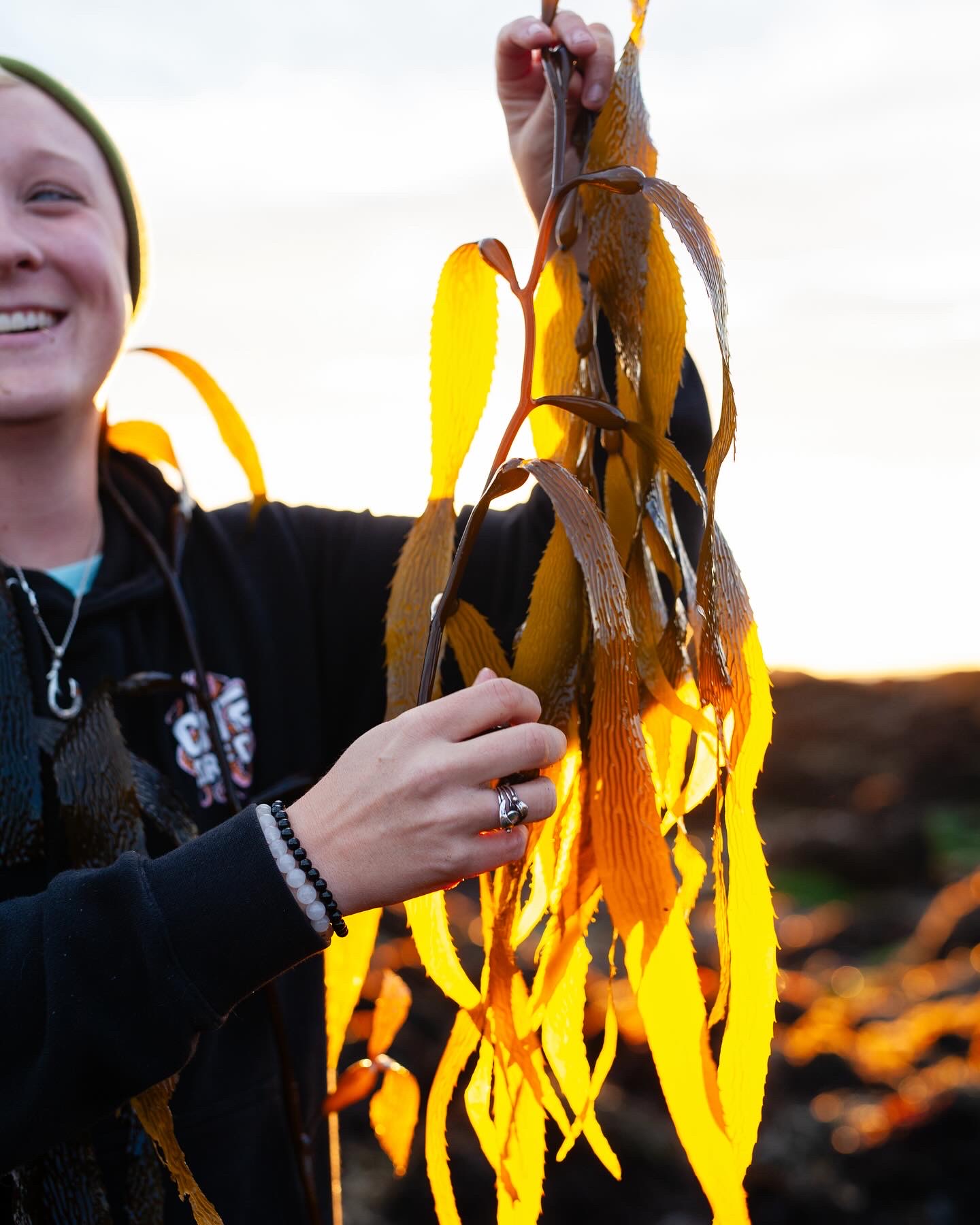
For ten years I ran Kelpful, a Central Coast seaweed company — harvesting, drying, teaching, building a small business from the intertidal up. That work pulled me into the wider ocean economy and, eventually, into the classroom.
The very first thing Kelpful ever did publicly was a seaweed cooking class in 2019. The turnout was incredible — a journalist showed up, our first article followed, and I still have that clipping framed. It was joyful, hands-on, and communal. That night confirmed what became the through-line of everything since: education and serving the community bring more meaning than any product ever could.
By 2023 the product side had run its course. The snack we'd developed was ready for national scale, but the capital wasn't there — and the food-system investors who did show up often treated us like "silly little women" rather than serious operators. So we closed the production warehouse, sold the equipment, and doubled down on what had always mattered most: teaching, foraging tours, and building ocean stewardship directly.
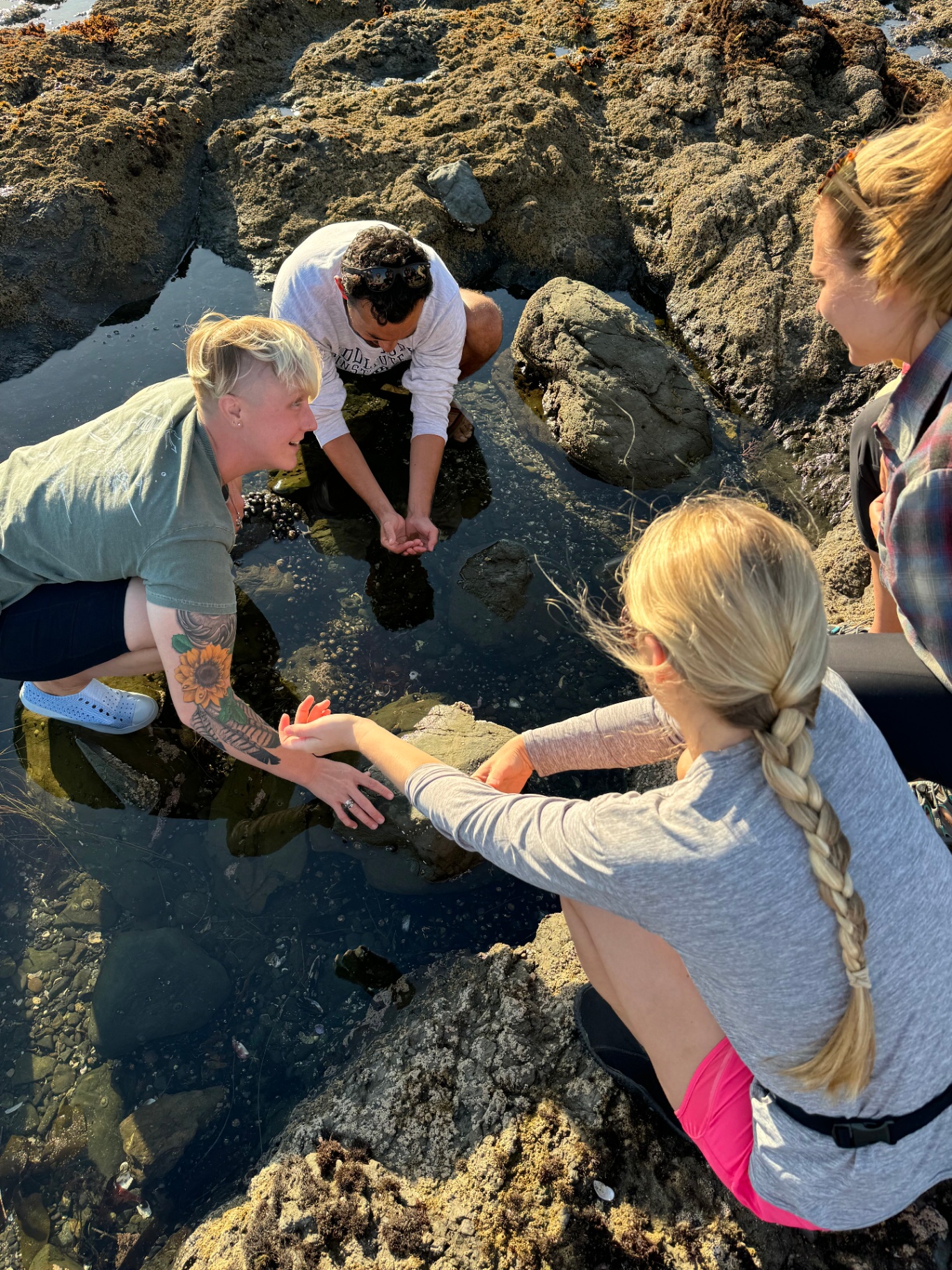
I've taught aquaculture, aquaculture business, marine ecology, and biology as a professor at Santa Monica College, MiraCosta College, and Chapman University. Today I lead the Blue Economy and Aquaculture Technology Workforce Certificate Program at MiraCosta College remotely — building curriculum and pathways for the next generation of coastal workers.
I'm also working toward a coalition to support small aquaculture businesses globally — sharing the production, branding, and marketing knowledge we built the hard way, and pushing for real funding models so others don't hit the same wall we did.
A lot of what I take on now is work the industry needs but nobody is doing at a scale people can actually afford — small-team software, accessible training, strategy for businesses that don't have enterprise budgets. I build these things because the gaps are real, and because "accessible" shouldn't mean "less careful." It just means priced for the folks who need it most.
It all runs as one practice because the skills aren't actually separate. Attention is attention. Building something useful is building something useful. The desk just happens to be on the Salish Sea.
The name Brackish came from that same edge. Brackish water is where fresh meets salt — where land and sea negotiate a shared chemistry. It felt right for a practice that moves between aquaculture and agriculture, between code and coastline, between classrooms and contracts. Everything under this roof — the aqua work, the ag work, the software, the teaching — shares one holding company because the through-line is the same: work at the boundary, where two systems meet and something new forms.
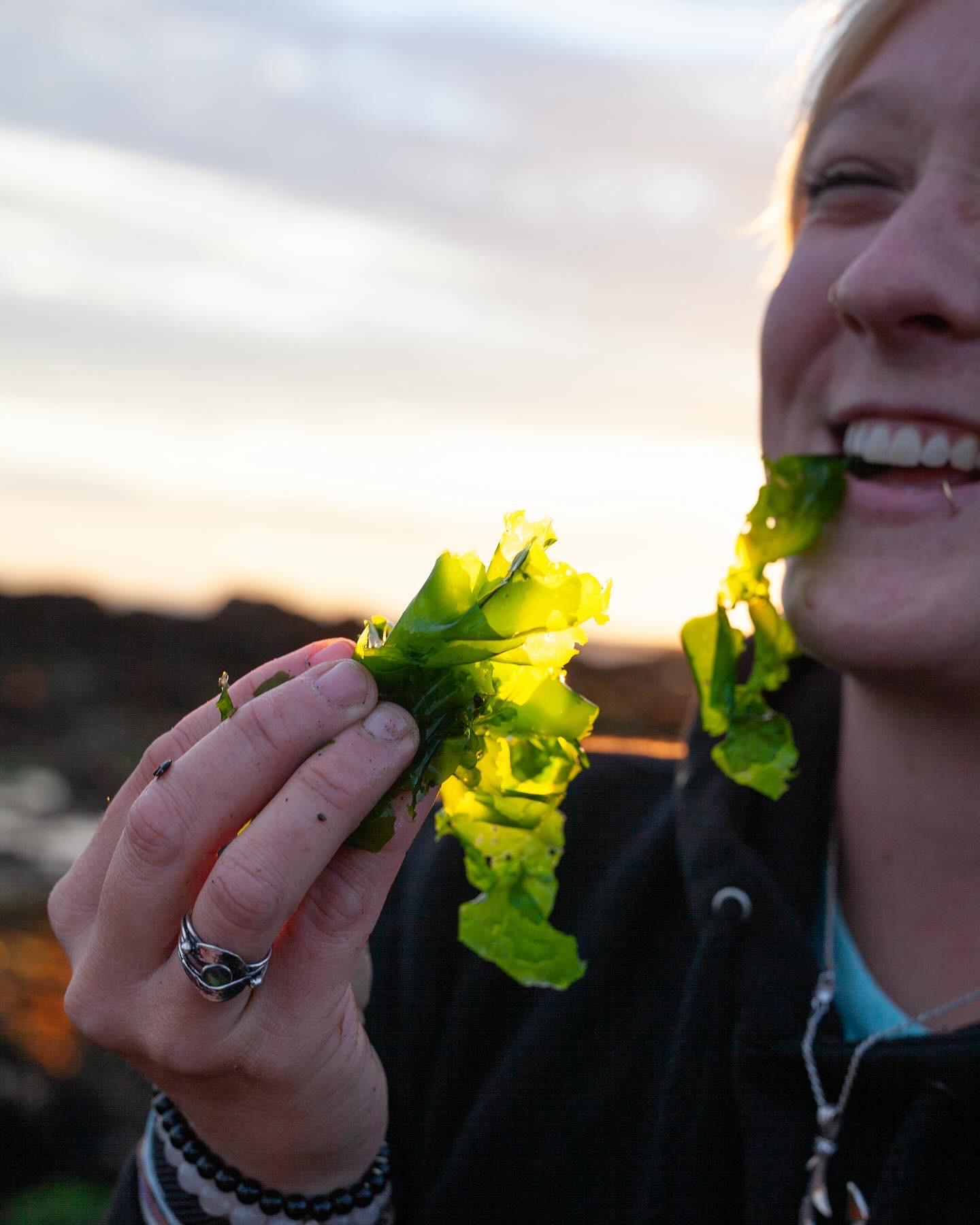
“This is what climate resilience tastes like.”
Seaweed is abundant, renewable, and fast-growing. It needs no fresh water or fertilizer, and it sequesters carbon and nitrogen while improving the marine ecosystems where it grows. The work has always been the same: pay close attention, build something useful, leave the place better.
Where I am
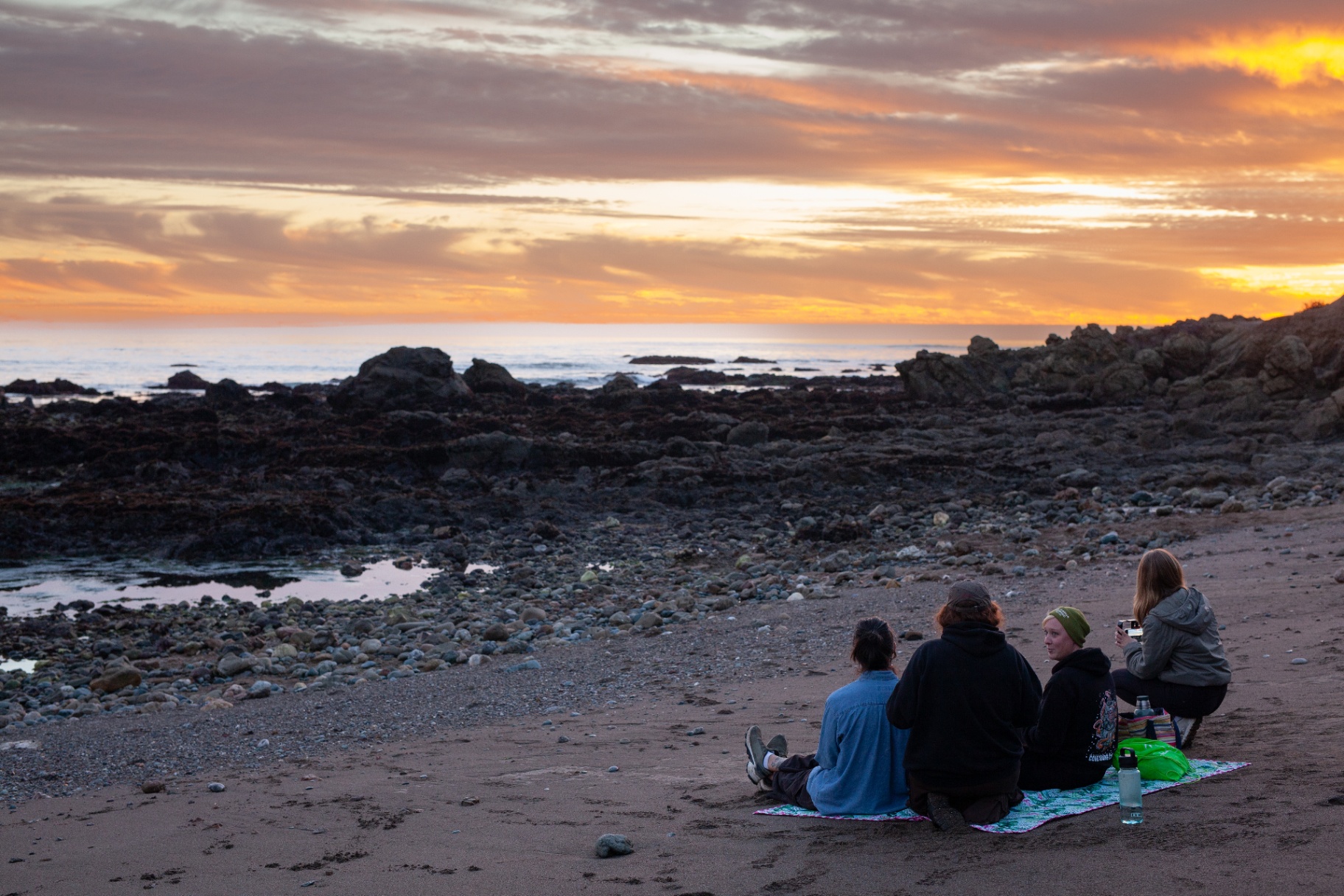
I'm based on Camano Island, Washington this year — on the edge of the Salish Sea, traditional lands of the Coast Salish peoples — taking care of my mom while running the practice remotely. Tours and in-person work happen in the North Sound; everything else happens anywhere there's wifi.
Next year I'm moving to Northern California to start building something I've been planning for a long time: a small educational retreat center and intentional community rooted in coastal ecology, food, and quiet work. More on that when it's real.
How I work
"Think like you've got nine brains, feel like you've got three hearts, and hug as though you have eight arms." — Liz Marvin, Weird Is Beautiful
Nine brains, one body. Software, strategy, seaweed, education — each line of work is its own arm with its own intelligence. They explore independently, but they all report back to the same center.
Three hearts. I don't take on work I don't feel. Every project gets full care — nothing is just a transaction.
Weird is beautiful. The best solutions come from looking at problems sideways, squeezing through gaps no one else saw. I take unconventional approaches seriously.
Small scope, real shipping. I'd rather ship a tight v1 than scope a giant v2 that never launches. Most engagements are two to eight weeks.
Wide cast net(work). If I'm not the right match, I'll connect you with someone in my network who is.
Cooperative within capitalism. Both the projects I build myself and the services I offer others try to operate cooperatively within a capitalistic system — fair value, mutual benefit, and relationships that don't end when the invoice is paid.
Appendix
The path so far
I've worked a lot of jobs. Retail floors, lab benches, QA/QC checklists, roundabout design in multiple states, lead ADA facilities designer and trainer — the whole engineering ladder from traffic studies up to senior design work and managed some of the largest transportation projects in the state. I've built teams and systems that worked across R&D and production, mentored junior engineers, and sat in more conference rooms than I care to count.
Somewhere in the middle of that, I spent time working in sustainability and renewable energy in Costa Rica, co-founded and ran a seaweed company, picked up an MBA focused on regenerative business while building that company, taught aquaculture and marine ecology at a few colleges, and started consulting for food and wellness brands. These days I lead the Blue Economy and Aquaculture Technology Workforce Certificate Program at MiraCosta College while running this practice — software, strategy, seaweed, and Enlichen — from wherever the tide is good.
The through-line isn't a credential. It's a habit: show up, learn the system, find the gap, build something that lasts. If you want the formal record — degrees, dates, titles — just ask.
Specifics available on request.